QR Codes on Packaging: The Complete Guide for 2026
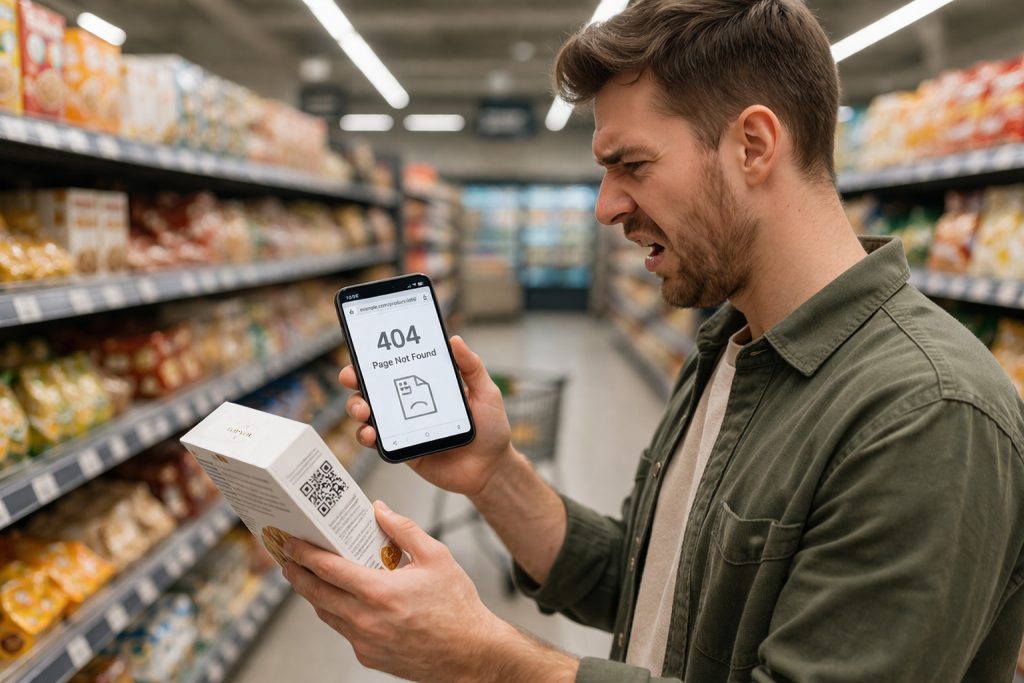
A packaging manager at a food brand told us he’d printed 200,000 units with a static QR code pointing to a product page. Two months later, the page URL changed after a website migration. Result: 200,000 packages in circulation scanning to a 404 error, with no way to fix it.
A dynamic QR code on packaging prevents exactly this. In 2026, a QR code on your packaging is a direct channel between your brand and your customer, and for some product categories it is becoming a regulatory requirement.
This guide covers the practical use cases, how to set it up, and the mistakes that cost brands time and money.
Why packaging is adopting QR codes in 2026
Three things are accelerating adoption this year.
GS1 Sunrise 2027
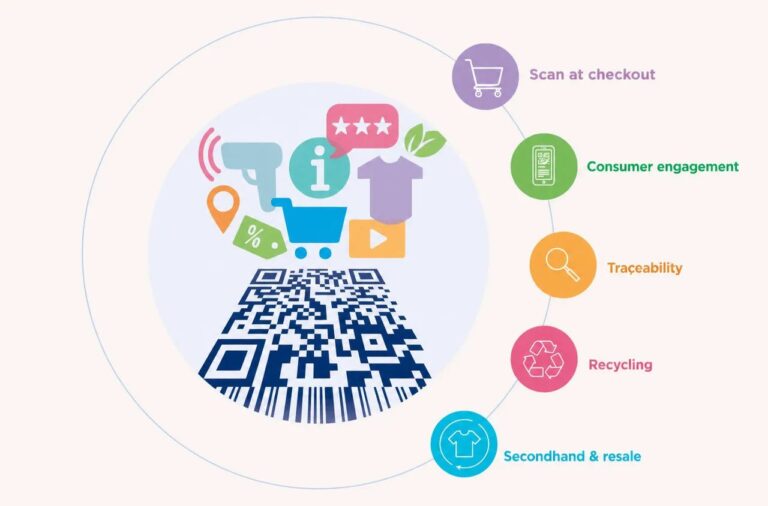
The global organisation behind barcodes is driving the transition to QR code-based GS1 Digital Links. By 2027, a single QR code on packaging will be able to replace the traditional barcode while offering additional functionality: product information, traceability, promotions. Brands that start now will be ahead when the 2027 target arrives.
The EU Digital Product Passport (DPP)
European regulation will progressively require a digital passport for certain product categories. The QR code on packaging is the natural vehicle: origin, composition, carbon footprint, recycling instructions, all accessible with a scan.
Consumer behaviour
Recent studies suggest that a majority of consumers regularly scan QR codes on products they buy. The question now is what your customers will find when they scan.
Unitag tracks 2.4 million scans daily across 189 countries. Over 40 million QR codes generated for brands including Bonduelle, Schneider Electric, and L’Oréal.
7 practical use cases for QR codes on packaging
1. Traceability and product origin
The QR code links to a page detailing the product journey: manufacturing location, production date, batch number, certifications. Particularly relevant in food and beverage, cosmetics, and pharmaceuticals, where transparency drives purchasing decisions.
2. Post-purchase consumer engagement
The product is in the customer’s hands. Recipes, usage tutorials, loyalty programme sign-up, referral offers. The QR code turns packaging into an entry point to your brand’s digital ecosystem.
3. Authentication and anti-counterfeiting
Each product receives a unique QR code. The consumer scans to verify authenticity. Critical for luxury brands, spirits, pharmaceuticals, and electronics, where counterfeiting represents significant revenue loss.
4. Technical documentation and after-sales
For industrial or electronic products, the QR code gives access to user manuals, installation guides, safety data sheets, or warranty registration forms. Everything is online, in the consumer’s language, with no need to print multilingual paper booklets.
5. Regulatory compliance and legal information
Limited space on the pack? The QR code links to complete nutritional information, allergens, usage conditions, or legal notices. It lets you meet regulatory obligations without cluttering the packaging design.
6. Data collection and analytics
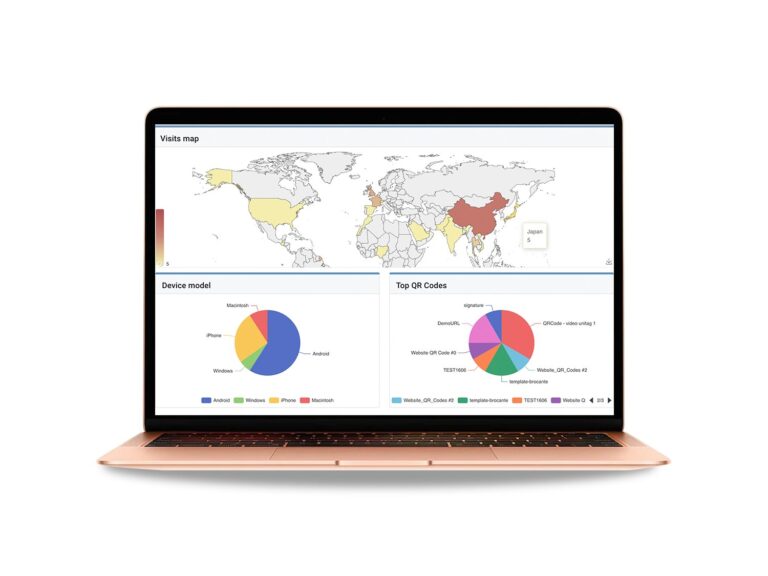
Every scan generates data: location, time, device, frequency. These analytics reveal where, when, and how consumers interact with your products. This kind of intelligence is simply not available from traditional packaging.
7. Multi-market management
The same packaging distributed across multiple countries can use a single dynamic QR code that redirects to content adapted to the consumer’s language or country. This simplifies production and logistics while delivering a localised experience.
See this in practice
How Bonduelle manages QR codes across all European markets from a single Unitag platform.
How to set up QR codes on your packaging
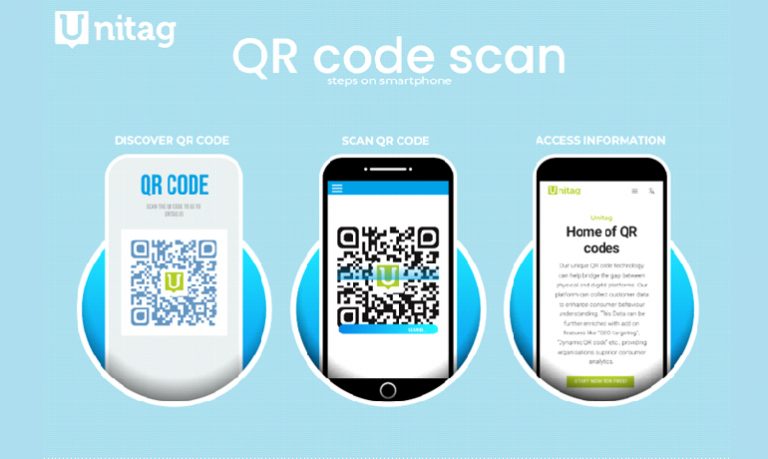
The setup follows four steps.
Step 1: Define the objective
What do you want the consumer to do after scanning? View a product page, sign up for a newsletter, verify authenticity, access a tutorial? The objective determines the content type and landing page.
Step 2: Create a dynamic QR code
Unlike a static QR code (which hardcodes a URL directly into the pattern), a dynamic QR code routes through a redirect server. You can change the destination at any time without reprinting. This is essential for packaging, where print runs are long and expensive.
Step 3: Customise and integrate into the design
The QR code should blend into the packaging design: brand colours, logo in the centre, frame with a call to action (“Scan to discover the origin”). A well-integrated QR code tends to get scanned more often than a generic black-and-white QR code.
Step 4: Connect your analytics
Every scan should feed into your reporting tools. Set up tracking from the start to measure engagement, identify your most-scanned products, and optimise campaigns.
On Unitag, all four steps happen from a single interface. The QR code is created with your custom domain, styled to your brand, and analytics are available in real time.
Mistakes to avoid
Using a static QR code on packaging is the most common and most expensive mistake. If the URL changes (site redesign, new campaign, error correction), you cannot update it. On packaging printed in large volumes, that can mean thousands of dead QR codes in circulation.
Ignoring size and placement. The QR code should be at least 1 cm x 1 cm, placed on a flat surface, with sufficient contrast against the background. A QR code that’s too small or poorly placed simply won’t get scanned.
Forgetting the call to action. A QR code without context gets ignored. Always add a line explaining what the consumer will find: “Scan to verify authenticity”, “Discover the recipe”, “Access your warranty”.
Not measuring. Without analytics, you don’t know whether your QR code gets scanned 10 times or 10,000 times.
FAQ
What’s the difference between a static and dynamic QR code?
A static QR code encodes the URL directly into the QR code pattern. It can’t be changed after printing. A dynamic QR code redirects through a server: the destination can be updated at any time without changing the printed QR code. For packaging, dynamic is essential.
What’s the minimum size for a QR code on packaging?
Minimum 1 cm x 1 cm, ideally between 1.5 and 2 cm per side. Size also depends on the intended scan distance and QR code complexity. Always test on the actual packaging material before committing to a full print run.
Do QR codes work on all smartphones?
Yes. Since 2017, iOS devices and most Android devices have included a native QR code reader in the camera app. No third-party app is needed.
How do I prepare for GS1 Sunrise 2027 compliance?
Start with an audit of your current barcodes. Identify priority products for migration to QR code-based GS1 Digital Links. A platform like Unitag lets you manage this transition progressively. See Digital Link Resolver pricing.
How much does it cost to add QR codes to packaging?
The printing cost of the QR code itself is negligible (it’s ink on packaging you’re already printing). The main cost is the dynamic QR code management platform, which varies by volume and features. Unitag offers plans suited to businesses of all sizes.
Ready to add QR codes to your packaging?
Start a free 14-day trial or book a demo with our packaging team.
Related articles
- What is GS1 Digital Link? The complete guide →
- GS1 Sunrise 2027: what brands need to know →
- Case study: how Bonduelle manages QR codes across Europe →