The EU Digital Product Passport registry is live. Here is what you can already do with it
Since 20 July 2026, you can open an account in the EU Digital Product Passport registry, test your product data against the official data models, and see exactly what registration will ask of your brand, before any obligation applies to your sector. The implementing regulation behind it, (EU) 2026/1778, entered into force on 6 August 2026. This article covers what the registry does, who registers and when, and the one preparation step that costs nothing to start now.
Unitag tracks 2.4 million scans daily across 189 countries. Over 40 million QR codes generated for brands including Bonduelle, Schneider Electric and L’Oréal.
What actually went live
The registry is the index of the Digital Product Passport system, and only the index. Passport data itself stays decentralised: each brand keeps its product data wherever it chooses. What the registry stores is the unique identifier, registration data and high-level metadata of every passport placed on the EU market.
The launch package is more useful than the word “registry” suggests. Economic operators get free access to a semantic repository (the official machine-readable data models), documented APIs, user guidelines and a helpdesk. There is a full testing environment, so a product-data team can check its records against the official models today and measure the gap while nothing is at stake.
Registration itself works in three steps. First, identity verification: a legal entity identifies itself with a qualified electronic seal, valid for up to three years. In a large organisation that procurement-and-legal step alone can take weeks, which is a good reason to look at it early. Second, submission via the website or the API, at model, batch or item level. Third, the registry issues a unique, persistent registration identifier and a Commission-sealed proof of registration, downloadable for 90 days and regenerable on demand. That sealed document is what a retailer or distributor is likely to ask for in B2B compliance checks. One caveat the regulation itself makes: the automated checks validate structure and completeness, and are expressly not a proof of legal compliance.
Who registers, and when
The first hard date is 18 February 2027, when passports become mandatory for industrial batteries above 2 kWh, electric-vehicle batteries and light-transport batteries under the Battery Regulation. The same date is the deadline for member states to appoint their national registry administrators.
Every other sector follows its own delegated act under the ESPR (Ecodesign for Sustainable Products Regulation, 2024/1781). The 2025–2030 working plan puts iron and steel first, with a delegated act expected in 2026, then textiles, whose act is projected for late 2027 with obligations applying roughly eighteen months after adoption. Furniture and electronics follow around 2028–2029. Two things to bear in mind: these timelines have already slipped by six to twelve months in the past, and the exact product scope for each sector only becomes definite when its delegated act is adopted.
The technical groundwork is further along than the legal calendar. As of July 2026, six of the eight harmonised standards have been published, covering unique identifiers, data carriers, APIs and access protocols. The infrastructure is arriving ahead of the obligations, which means the preparation window is open now, on your own schedule.
The data carrier question
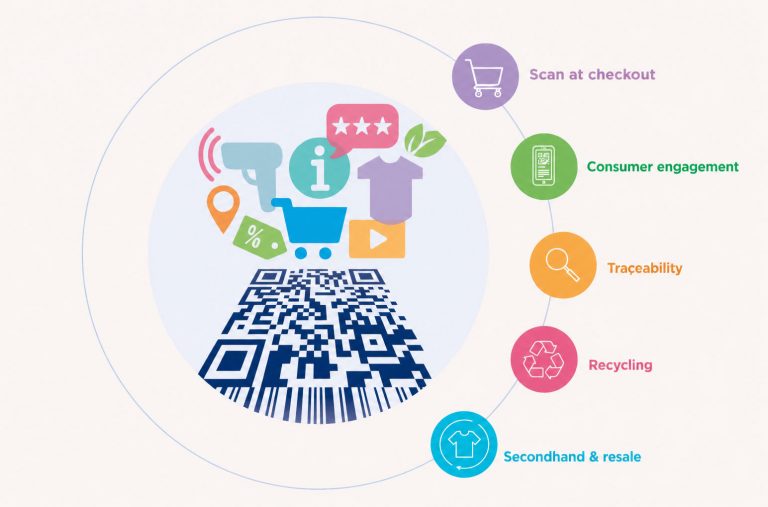
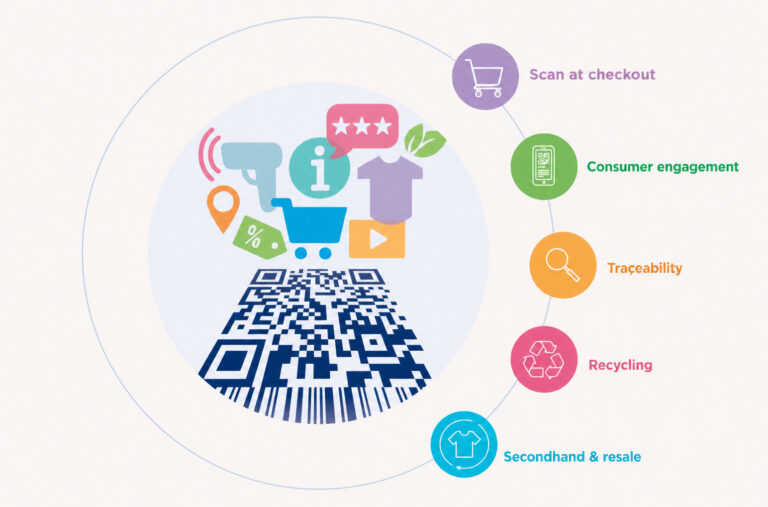
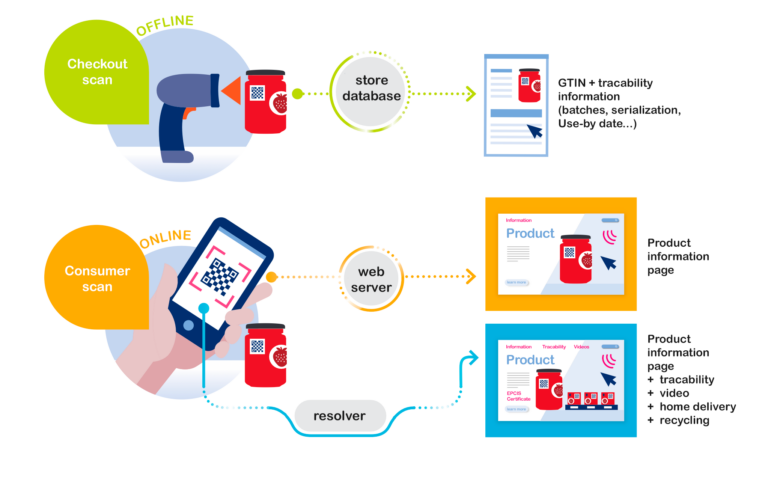
The passport must be reachable from the physical product through a data carrier. The implementing regulation does not prescribe which one: QR code, Data Matrix, RFID and NFC all remain possible, and each delegated act will set its sector’s requirements. In practice, the convergence is already visible. A QR code carrying a GS1 Digital Link (a structured web address that contains the product’s GTIN) is the same carrier that retailers plan to be able to accept at point of sale by the end of 2027 under GS1 Sunrise 2027. One printed QR code can serve checkout, consumer engagement and, later, the passport.
Bonduelle is already structuring its product data with GS1 Digital Link QR codes
See how the brand prepares its ranges.
Start the links now, add the passport later
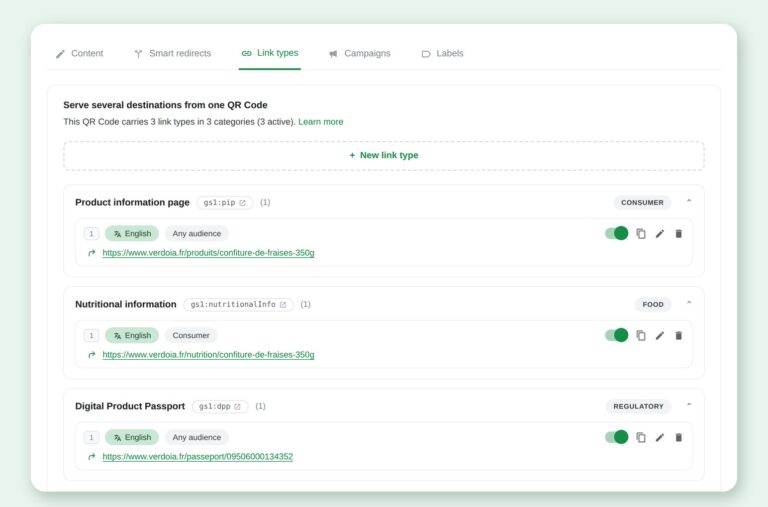
Nothing about the DPP requires you to wait before printing the right QR code. A GS1 Digital Link QR code printed today points wherever you choose: product page, traceability record, instructions, a campaign. When your sector’s delegated act applies, you add the passport as a new destination behind the same QR code. The label and the print run stay untouched; only the link changes.
The reverse path is expensive. A brand printing unstructured QR codes today (a plain campaign URL with no GTIN in it) will have to redo its markings when its sector switches over, and across dozens of SKUs and several markets that means full reprint cycles.
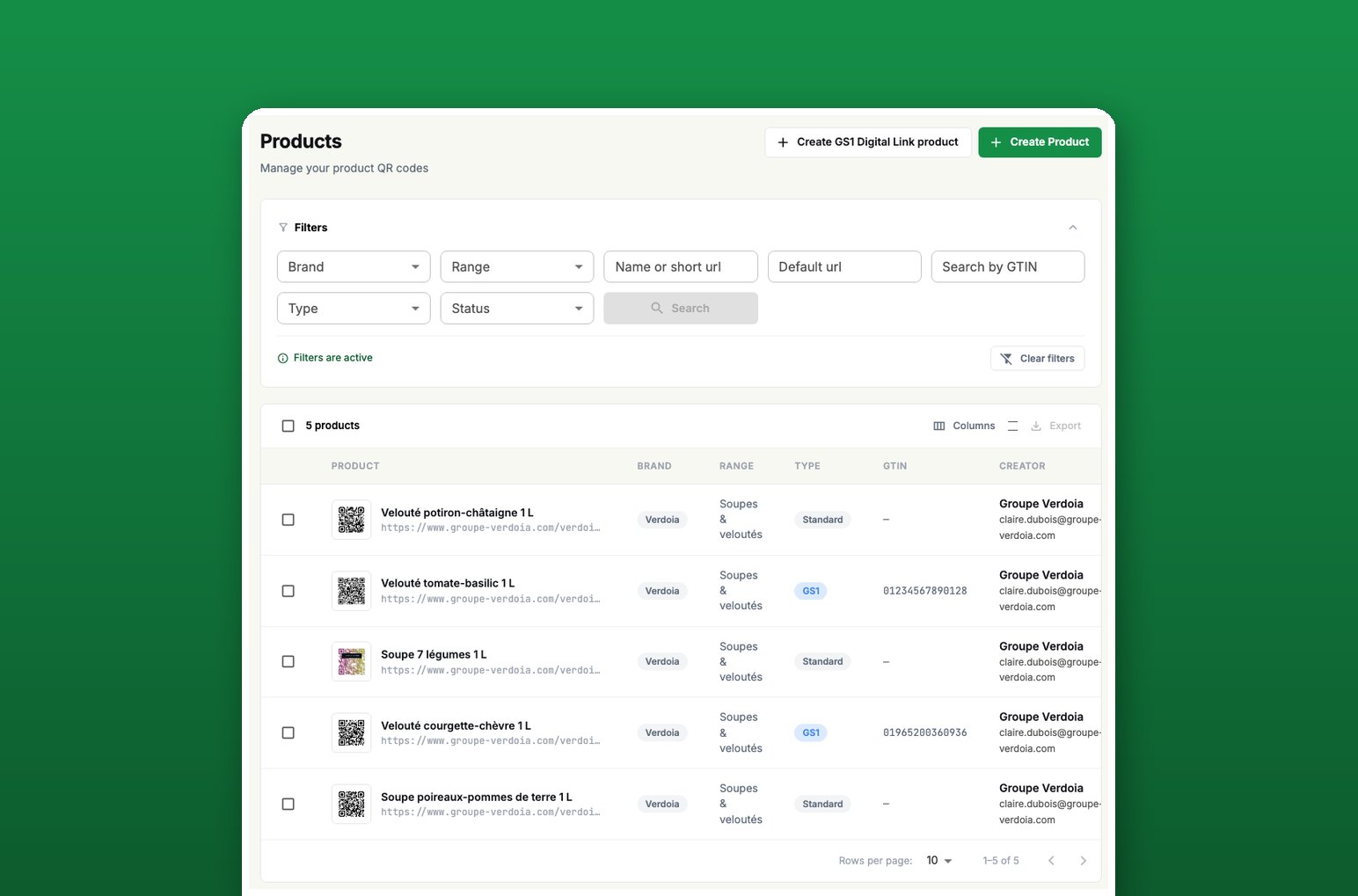
This is what Unitag’s Digital Link Resolver, EU-hosted and GDPR-compliant, manages: the URL mapping (which GTIN opens which destination, in which context). The platform is certified by GS1 and listed as a GS1 Solution Provider, with scan analytics by brand, range and product. If you want the standard itself explained, our GS1 Digital Link guide covers the URI syntax and use cases, and the QR codes page covers day-to-day creation and management.
What a packaging or compliance team can do this quarter, with no print budget:
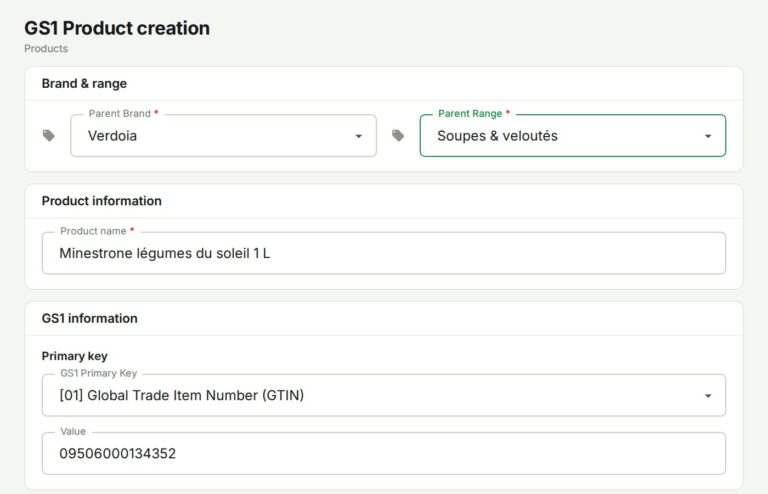
- assign a GTIN to every SKU in scope and check product-data quality;
- create GS1 Digital Link QR codes for priority ranges and place them on the next natural print cycle;
- open the registry’s testing environment and measure the gap between your data and the official models.
The regulation arrives sector by sector, on a staged calendar. Brands that set their identifiers now will have nothing to catch up on.
Create your first GS1 Digital Link QR code
Free trial, EU hosting, no per-code fees.
Read next
- GS1 Digital Link resolver: the practical guide
- GS1 Digital Link explained: the QR code that replaces the barcode
- GS1 Sunrise 2027: the QR code deadline, and what to prepare in 2026