There’s a quiet inefficiency sitting inside most B2B QR code contracts, and almost nobody is talking about it.
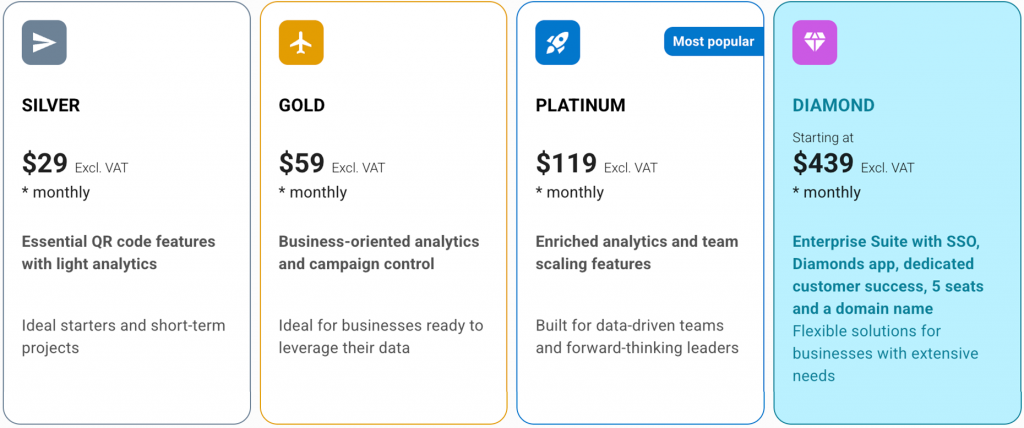
If you’ve ever evaluated a QR code platform for your business, you’ve probably encountered the same tiered pricing structure: a Basic plan that gives you 10 codes, a Professional plan with 50, and an Enterprise plan that finally unlocks “unlimited” — all bundled together with analytics as part of the package. It feels logical on the surface. More codes, more capability, higher price. Simple.
But there’s a fundamental problem with this model. It’s pricing the wrong thing.
The Asset vs. The Insight
A QR code is a static asset. Generating one costs a platform provider almost nothing — a few milliseconds of compute, a handful of bytes of storage. Whether a platform hosts 10 QR codes or 10,000, the infrastructure cost difference is negligible. QR codes don’t consume resources by existing. They’re inert until someone scans them.
What does consume resources — and what genuinely drives value for businesses — is everything that happens after the scan.
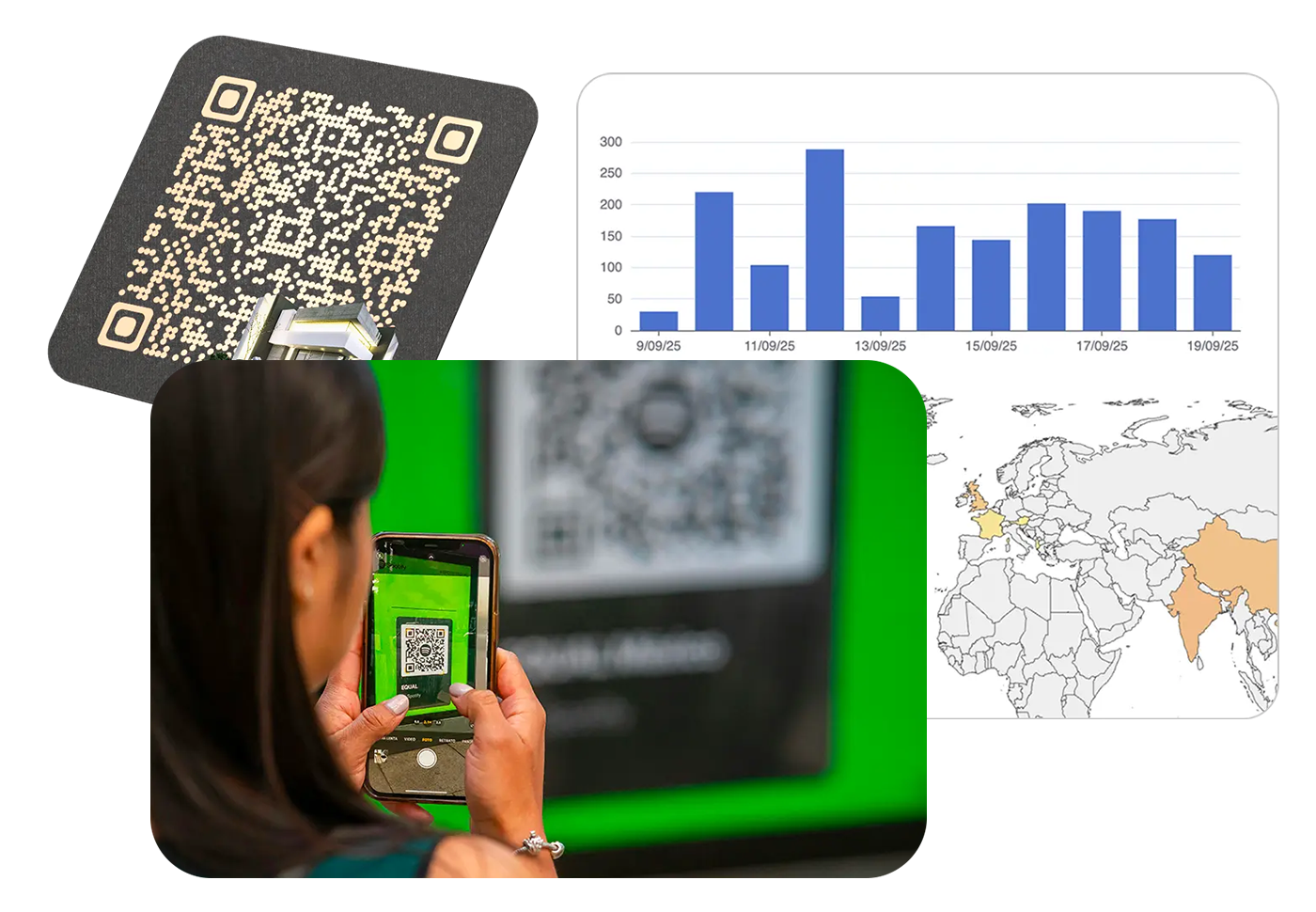
Every time a code is scanned, data is generated. That scan needs to be captured, timestamped, geolocated, attributed to a device type, cleaned of bot traffic, deduplicated, stored, and made queryable. Do that at scale, across hundreds of campaigns and thousands of daily interactions, and you’re now talking about real infrastructure. Real cost. Real complexity.
And yet, the industry continues to charge per code.
What B2B Businesses Actually Need
For a B2B company deploying QR codes — whether in product packaging, field operations, trade show materials, retail environments, or direct mail — the number of codes is rarely the constraint. The questions that keep marketing managers and operations teams up at night are very different:
- Which codes are performing, and which aren’t?
- Are the scans we’re seeing genuine customer interactions or noise?
- What happened to engagement last quarter compared to this one?
- Can I pull a clean report for the leadership team by Friday?
None of those questions are about how many codes a company has. They’re about the depth, accuracy, and accessibility of the data those codes generate.
When a business upgrades its QR code plan, it’s almost never because it ran out of codes. It’s because it needs better data. More history. Cleaner reporting. The codes themselves are just the delivery mechanism — the data is the product.
The Misalignment in Today’s Pricing
Current pricing models create a strange distortion. Companies end up paying for a resource they have in abundance (code generation) while being rationed on the resource they actually value (analytics access).
This plays out in frustrating ways. A business might be well within its code limit but find itself unable to access historical scan data beyond 30 days, unable to export reports without upgrading, or receiving raw scan counts when what they need is cleaned, deduplicated data that actually reflects real human engagement.
The upgrade is positioned as “more codes,” but what the customer is really buying — and what the provider is really spending money to deliver — is better analytics.
That’s a pricing model that obscures value rather than reflecting it.
A Better Way to Think About It
A more honest pricing model aligns cost with what actually creates value and what actually costs money to provide. For QR analytics, that means thinking across a few dimensions:
Pricing Tier Structure
| Tier | What You Pay For | What You Get |
| Analytics Depth | Access to 30, 90, 365+ days of scan history | Trend analysis, seasonal comparison, historical reporting |
| Data Quality ✨ | Clean, deduplicated, bot-filtered data vs. raw counts | Actionable intelligence — not noise |
| Report Exports | Per download or export bundle | Branded CSV/PDF reports ready for stakeholders |
| QR Code Generation | Unlimited — always included | As many codes as your campaigns require |
Data history and access. How far back can a customer query their scan data? A company that needs two years of trend analysis to inform seasonal strategy costs more to serve than one that only needs the last 30 days. This is a real, quantifiable cost driver — storage, compute, and query infrastructure all scale with historical depth.
Data quality and accuracy. There is a significant difference between raw scan counts and clean, actionable data. Filtering bot traffic, deduplicating repeat scans, resolving location data accurately, attributing scans to the right device context — these are not trivial operations. Better data costs more to produce, and it’s worth more to the businesses relying on it to make decisions. Pricing should reflect that gradient.
Reporting and export. When a team downloads a report, they are operationalising the data — extracting its value in a concrete, usable form. This is a natural and fair moment to build pricing around. It directly correlates with how intensively a business is using the platform’s analytical output.
And underneath all of this: unlimited codes. Because charging for codes was never the right model to begin with.
Why This Matters for B2B Specifically
Consumer-facing QR deployments might involve a handful of codes and relatively light analytical needs. A small business linking a restaurant menu or a retail product to a landing page doesn’t need enterprise-grade scan intelligence.
B2B is a different story. Enterprise deployments often involve dozens of campaigns running simultaneously, codes embedded in physical assets across multiple geographies, and stakeholders who need reliable data to justify marketing spend, track operational performance, or demonstrate ROI to clients.
For these organisations, the current model creates artificial ceilings in the wrong places. The question is never “do we have enough codes?” It’s always “do we have enough insight?”
Pricing that starts from that question — and scales based on the depth and quality of analytics rather than the number of assets generated — is a fundamentally better fit for how B2B companies actually use these tools.
The Takeaway
QR codes are infrastructure. Analytics is the service.
The companies that recognise this distinction will stop asking “how many codes do I get?” and start asking “what does my data actually tell me, how far back can I see it, and how clean is it?” Those are the questions that drive real business decisions.
And the platforms that build their pricing around those questions — rather than around the cost of generating a few extra pixels — will be the ones that earn long-term trust in the B2B market.
It’s time to stop paying for the code. Start paying for the intelligence it creates.
Unitag is leading that revolution — and the QR code industry will never price the same way again.
Click here to check out our pricing page